Even the most hardened prospect can't resist a good story...when it is well told. Keep in mind, the reason you tell stories is because your prospects will not remember everything you say. They will, however, remember what they see and feel while they listen to you speak.
To convey those stories, there are three basic formulas. They work together in harmony.
Formula 1: Situation, solution, success
Situation. The client situation is their problem, the pain, and how it is similar to the prospect company you are now talking to. So, for a moment, think of one of your satisfied clients. How did they articulate their problem to you?
"Help! My teams are not productive."
"Help! Our current supplier of office equipment is costing us too much!"
"Help! We are not compliant."
"Help! We assumed experienced technology professionals would be able to effectively tell our story!"
Solution. Explain your process in a way that your prospects can see what it is like working with you, using phrases such as..."What Diane benefited from is our usual three-step approach we take with each new client: First we..."
Success. This is the end of the story, the happily-ever-after, how did you improve their condition? Just as with the situation, this needs to be in the client's words. You can repeat their glowing comments. When you use their words to talk about you, they can be more glowing than you would say about yourself. An example:
"Patricia, if Diane were here, she would tell you, ‘When I first talked to the people at Profit Factor, my accounting was in a total mess. My last bookkeeper had dropped the ball, which resulted in $3,000 fines and penalties. Within three weeks of hiring Profit Factor, not only did I get my $3,000 refunded, they found me more legitimate write offs that resulted in another $8,762 refund. In the first two months, their efforts paid for their services for the next four years. They have my loyalty for life!' In your portfolio you will find her letter and those of two dozen other clients who have businesses of your size."
This is social proof, or what I like to call "taking your satisfied clients on your sales calls."
Formula 2: Character, dialogue, and dramatic lesson learned
Character. The secret of awesome storytelling is to populate our stories with flesh-and-blood characters that our listeners can relate to. You are the salesperson. They are the potential buyers. They relate to the people in your story who were in a similar situation to them.
Start by giving your characters a back-story, as simple as their title and years of experience. For example, if you spoke of "a human resource director with 23 years experience," the subtext– the content underneath the spoken dialogue–is that someone with 23 years of experience knows how to make wise decisions. Your prospects often reach their conclusions based on the information they heard from "one of your characters who is like them."
Dialogue. It's important in your example to have the actual words of the client state the problem and then state the success. Their words are often edited and sometimes dramatized; however, the emotional context is accurate. An example:
When meeting planners are considering hiring me to keynote a conference, they often ask something like this: "Patricia, how do we know you are our best choice for our keynote speaker?" I reply, "I don't know. However, if you were to ask Dan Maddux, the Executive Director of the 24,000-member American Payroll Association, he will tell you, ‘At APA we've been hiring professional speakers for over 30 years. Without a doubt, Patricia Fripp is the most hassle free, versatile, and dynamic professional speaker we've ever hired. Every year since 1996, she's been at our convention. On six occasions she has keynoted, and every year she delivers 3-6 breakout sessions. She helps write the speeches for six of our leaders and coaches them all on their delivery. Not only is Patricia the hardest-working speaker at every convention, she is the best speaker investment you could make.'"
Dramatic lesson learned. Can you see what I did there? No way could I say, "I am the best speaker investment you could make." But I do...using Dan's words. That's the prospect's takeaway–I've made it obvious to the listener why I'm telling the story.
Formula 3: Take a page from Hollywood
Hollywood knows how to tell a good story better than most salespeople–and you can gain an advantage by using a common screenplay structure.
A day in the life. Early in any film you soon come to understand a day in the life of the main character: the protagonist or hero. Let's look at Joe, a sales manager in a high-end hotel, well dressed with a crisp shirt and great silk tie. We know there are no casual Fridays for the sales staff at a San Francisco luxury hotel atop Nob Hill, which was used for the fictional St. Gregory Hotel in the 1983 television series Hotel.
Something happens! Joe, the character that the audience empathizes with, runs into a problem: the antagonist or bad guy. In this case, it's not a person, but rather that he has to deliver a stand-up presentation to a large group of influential decision makers. He is very nervous and afraid he will lose the $500,000 sale.
As a result of that...Joe calls his friend Fripp the speech coach.
As a result of that...Fripp tells him what to say and why it will work. Emotional and intellectual connection.
As a result of that...Joe makes the sale, and Fripp's advice pays off once again!
Is using Hollywood-style strategies overkill? No–even the most analytic of your prospects enjoys being entertained. Make your stories come alive, and they will be remembered and repeated.
The great movie director Alfred Hitchcock said, "A movie is like life with all the dull parts taken out." This is what we are doing with these three simple formulas: shrinking your time and conversations to a nub for maximum impact.
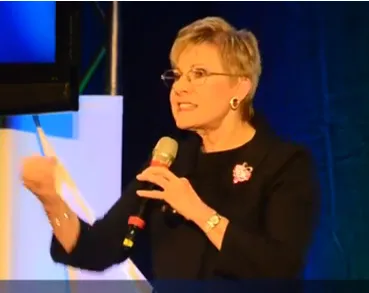
Patricia Fripp, CSP, CPAE is a Hall of Fame keynote speaker, in-demand executive speech coach, and sales presentation skills expert. Individuals and companies hire Patricia when they want to competitive edge that comes for persuasive presentations.
Contact Patricia Fripp www.fripp.com, pfripp@ix.netcom.com
3 Formulas for a Good Story Well Told
About This Contributor
Patricia Fripp